We use cookies to run this site. With your consent, we also use them for our demo scheduler, analytics and marketing, including identifying the companies and people who visit us. Change your choice anytime under "Cookie Preferences".Privacy Policy
🚀 Dextr AI raised $6.7M to bring an AI workforce to hospitality. Learn more 🚀 Dextr AI raised $6.7M to bring an AI workforce to hospitality. Learn more
The 13 Best Hotel Automation Tools for 2026, and the Job Each One Does
No single tool automates a whole hotel. These 13 each take one job off your team, from answering guests and running the PMS to setting rates, taking payments, opening doors and cutting energy use. Here is what each one automates, what it costs, who it suits and what to check before you sign.
Hotel automation tools are software and connected devices that finish routine hotel work without someone starting each step: answering and booking guests, assigning rooms, keeping rates in sync across booking sites, setting prices, charging cards, issuing door codes and turning down the heating in empty rooms. The 13 best hotel automation tools for 2026 are Dextr AI, Oracle OPERA Cloud, Mews, Cloudbeds, Stayntouch, SiteMinder, IDeaS G3 RMS, Duetto, Shift4, RemoteLock, Salto, Verdant and Zapier.
Each one does a single job well, and none of them does every job. This guide is organized by job: what each tool automates, who it suits, what it costs where the price is published, and what to check before you sign.
Key takeaways
Choose the PMS first. Every other tool on this list reads from it or writes to it, so judge each one by how well it connects to your PMS, not by the length of its feature list.
Automation comes in two kinds. Rules run fixed steps, such as a channel manager pushing a new rate to every booking site. AI agents handle the requests that don’t follow a script, then act in your systems. Most hotels need both.
The phone and the inbox are usually the biggest leak. In one Dextr AI rollout at a hotel chain with more than 50 properties, the AI answered 3.5 to 3.9 times as many calls as the human channel had.
Prices are rarely like for like. PMSs and revenue systems are quoted per room, locks per door, payments per transaction, Zapier per task and AI agents by usage. Compare the monthly total with the hours and bookings each tool covers.
Ask every vendor the same three questions: what does it write to the PMS, what happens when it fails, and where is the record of what it did.
No-code links between apps that don’t integrate natively
Small teams filling the gaps between tools
Free plan; paid from $19.99 a month, billed annually
How We Chose These Hotel Automation Tools
A tool made the list only if it passed four tests:
It does the work, not just a report about it. Each tool completes a task without staff starting each step: a booking written, a rate published, a card charged, a code issued, a room set back.
It connects to the PMS. A tool that cannot read or write reservations creates double entry, which is the opposite of automation.
It is documented in public. Each vendor publishes what its product does, and several publish prices. Where they don’t, we say so.
Prices are as published on vendor websites in November 2026. Most hotel software is quoted, so treat any figure here as a starting point. Dextr AI is our product: read entry 1 with that in mind.
The 13 Best Hotel Automation Tools for 2026
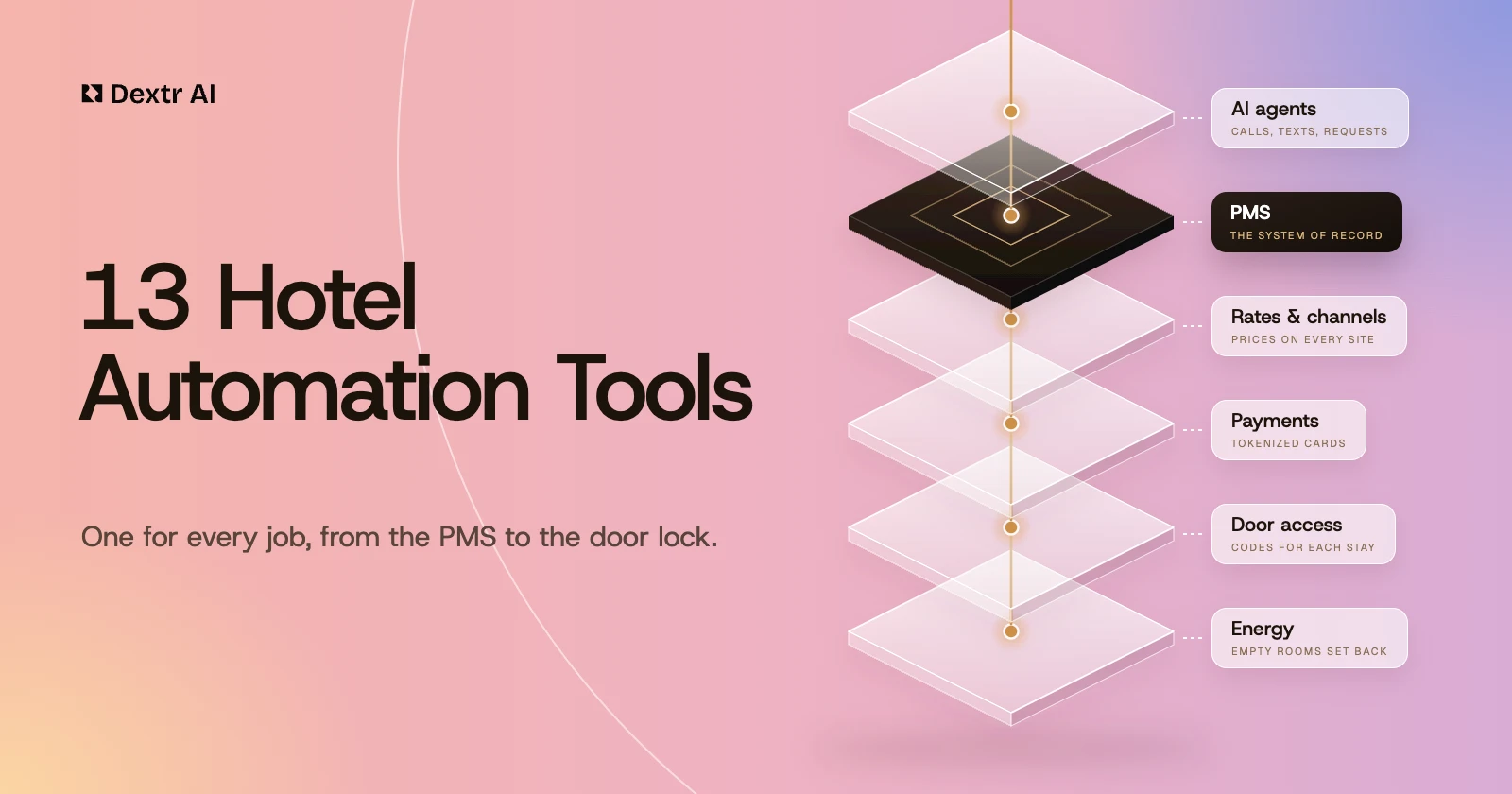
The list runs from the guest-facing layer down to the systems underneath: AI agents first, then the PMS, distribution, pricing, payments, door access, energy and the glue that connects what is left.
1. Dextr AI
Best for: hotels that want AI agents to answer guests on every channel and finish the work in the PMS.
Dextr AI is an AI workforce for hospitality: AI agents that work inside the PMS a property already uses. Daisy handles calls, Alfred guest messages and check-in, Manny housekeeping and work orders, and Cosmo guest campaigns.
Automates: calls, texts, chat and email; bookings, changes and deposits; check-in and access codes; housekeeping boards and work orders; guest campaigns.
Results: 94% of 5,110 guest calls and texts resolved without staff at Las Pinos Campground, and 1,200 housekeeping hours saved across six California hotels by texting guests to ask whether they wanted their room cleaned.
Pricing: usage-based and quoted per property, with no setup fee. Properties typically go live in seven days.
Check first: what your PMS lets an outside system write. Ask for a test booking on your own system before go-live.
2. Oracle OPERA Cloud
Best for: hotel groups, brands and large full-service hotels that run many properties on one system.
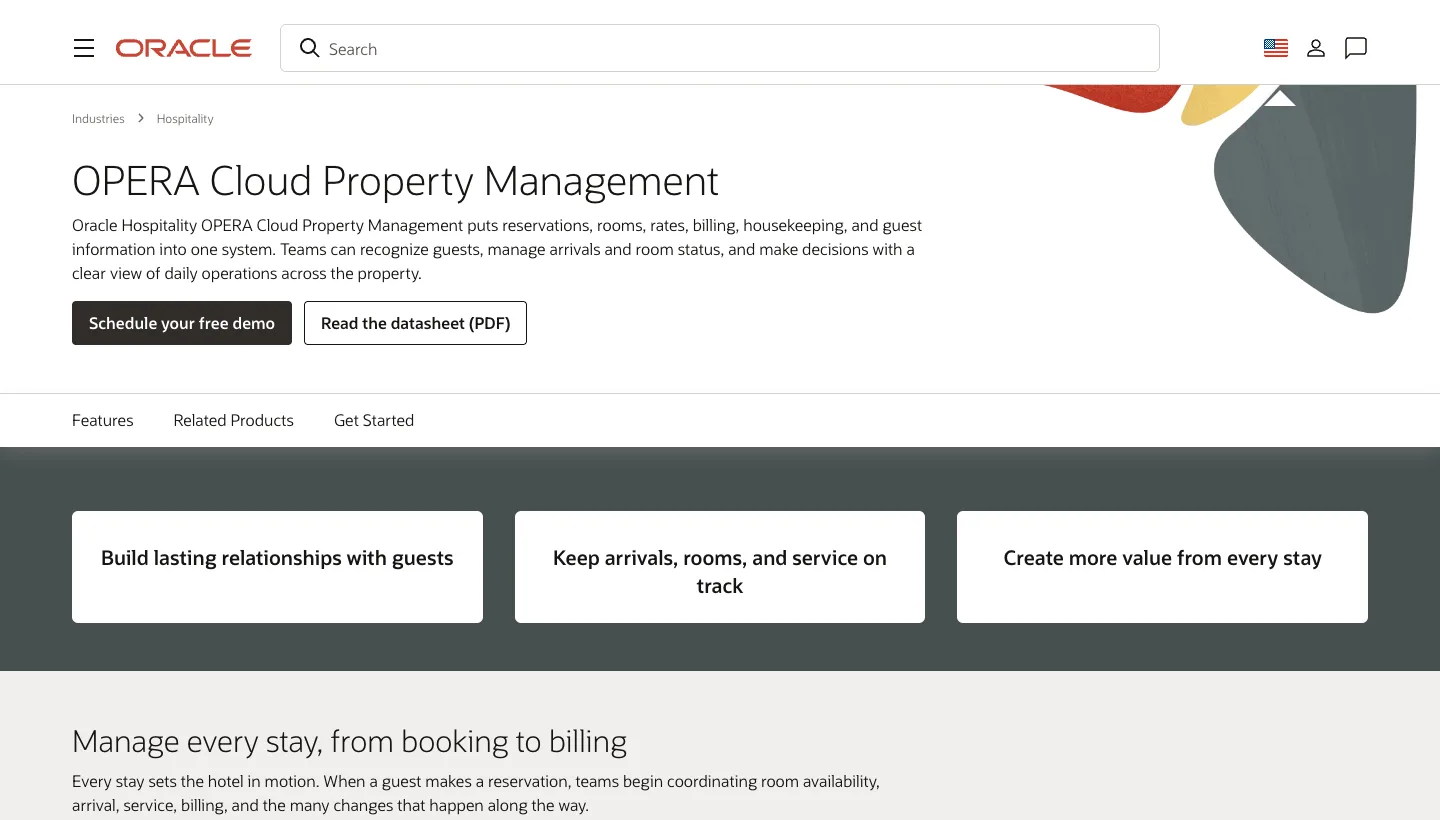
OPERA Cloud Property Management keeps reservations, rooms, rates, billing, housekeeping and guest profiles in one system. Its automation comes from rules: chains and properties configure required fields, screens and workflow rules that guide staff through each task, and mobile tasks move room-status updates, housekeeping assignments and maintenance requests away from the front desk. Reports can be scheduled and emailed. Separate Oracle modules add central reservations, distribution to direct and third-party channels, upgrade offers before arrival and at check-in, loyalty, sales and events, and Oracle Payments. IDC MarketScape named OPERA Cloud a Leader in its 2025 assessment of hotel property management systems.
Automates: room assignments and status, billing and end-of-day close, scheduled reports, workflow rules across a portfolio, and upgrade offers.
Works with: outside systems, from revenue management to door locks and AI agents, connect through the Oracle Hospitality Integration Platform (OHIP). Dextr AI has a live OPERA Cloud integration.
Pricing: quote only.
Check first: who pays for API calls. On OHIP, the owner of the app key pays per call, so ask every vendor that connects whether that cost is theirs or yours. Our PMS integration guide explains how OPERA Cloud connections work.
3. Mews
Best for: independent hotels and groups that want automation built into the PMS, including payments and self check-in.
Mews is a cloud PMS built to take routine steps off the desk. Guests check in online or at a kiosk and receive digital keys. Cards are tokenized and charged at each step of the stay, and payments are reconciled automatically. Its revenue management prices rooms on autopilot up to 24 months ahead, an Automations add-on runs workflows, and housekeeping comes as a suite in its top plan or as an add-on. Guests are ready for it: in a Mews and Talker Research survey of 2,000 U.S. travelers, 70% said they were likely to use an app or kiosk instead of the front desk.
Automates: online and kiosk check-in, digital keys, card tokenization and charges, payment reconciliation, dynamic pricing and workflow automations.
Works with: Dextr AI through a live integration, plus the apps in the Mews marketplace.
Pricing: three plans, Mews Pro, Mews Core and Enterprise, priced per room and quoted (pricing). Payment processing fees are charged separately.
Check first: which features sit in which plan. Kiosks, digital keys and the housekeeping suite are in Pro; Core covers the essentials for less complex properties.
4. Cloudbeds
Best for: independent hotels, B&Bs, hostels and small groups that want the PMS, channel manager and booking engine from one vendor.
Cloudbeds combines a PMS, channel manager, booking engine and payments, so a rate change goes out to every connected booking site automatically and each new booking updates availability everywhere. Plans are modular. Flex covers the PMS, payments and marketplace and lets you keep your own distribution partner; One adds the channel manager and booking engine; Experience adds guest experience and reputation tools; Enterprise is a custom package for groups. Add-ons include revenue management, a guest marketing CRM and Revenue Intelligence, which runs on Signals, Cloudbeds’ own AI model. Cloudbeds says more than 20,000 hoteliers use it and that its marketplace has more than 400 integration partners.
Automates: rate and availability updates across channels, direct bookings, payments, housekeeping status and guest emails.
Works with: Dextr AI through a live integration (setup guide), plus lock platforms such as RemoteLock and Salto.
Check first: room mapping. Cloudbeds’ own RemoteLock guide warns that an outdated mapping can stop door codes being generated or sent, so check it again whenever you rename or add rooms.
5. Stayntouch
Best for: select-service, upscale and independent hotels moving arrival to the guest’s phone or a kiosk.
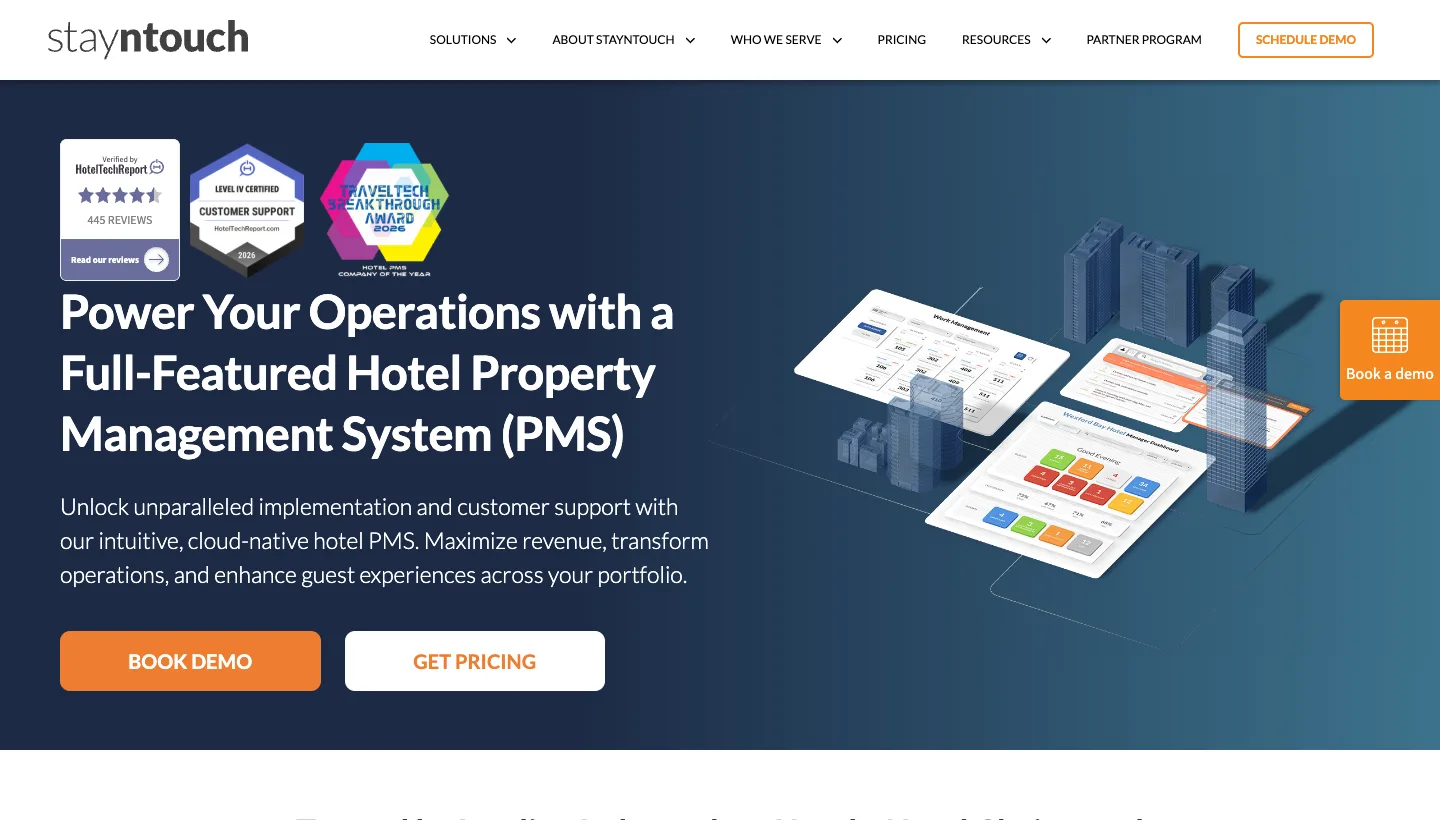
Stayntouch is a cloud PMS designed around mobile and self-service. Digital registration cards let guests review their details, accept terms and sign on their own phone or a tablet. Kiosks handle check-in and checkout, and the PMS sells upgrades, packages and early or late checkout automatically. Stayntouch Pay handles payments, and its integration hub lists more than 1,400 interfaces. Stayntouch says a guest can be checked in in under 30 seconds.
Automates: registration, check-in and checkout, upsells, payments and housekeeping assignments.
Works with: Dextr AI through a live integration, and RemoteLock for door codes.
Pricing: quote only.
Check first: what happens at the edges. Stayntouch’s RemoteLock guide says a guest checked in by a staff member in the PMS is not emailed the door PIN automatically, and that checking a guest out does not end their access before the scheduled time.
6. SiteMinder
Best for: hotels that sell on many booking sites and need rates and availability right on all of them.
SiteMinder calls itself the world’s leading hotel commerce platform and says about 53,000 hotels in 150 countries use it. Its channel manager sends rates and availability from one screen to every booking site you sell on and brings their reservations back into the PMS, which is what stops one room being sold twice. The platform adds a booking engine, payments, Demand Plus for metasearch sites such as Google, Trivago and Tripadvisor, and Little Hotelier, an all-in-one system for small properties. In April 2026 SiteMinder took Demand Plus into AI assistants such as ChatGPT and Claude, where travelers can see live rates and book on the hotel’s own booking page (Hospitality Net).
Automates: rate and availability updates on every connected booking site, and reservations delivered straight to the PMS.
Works with: the PMS, so every tool that reads the PMS, Dextr AI included, sees the same availability.
Pricing: a monthly subscription that varies by country and property size; check SiteMinder’s pricing page for your market.
Check first: mapping. Map every room type and rate plan before go-live, because a wrong mapping sells the wrong room on every site at once.
7. IDeaS G3 RMS
Best for: hotels and groups with a revenue manager who wants forecasting and pricing decisions automated.
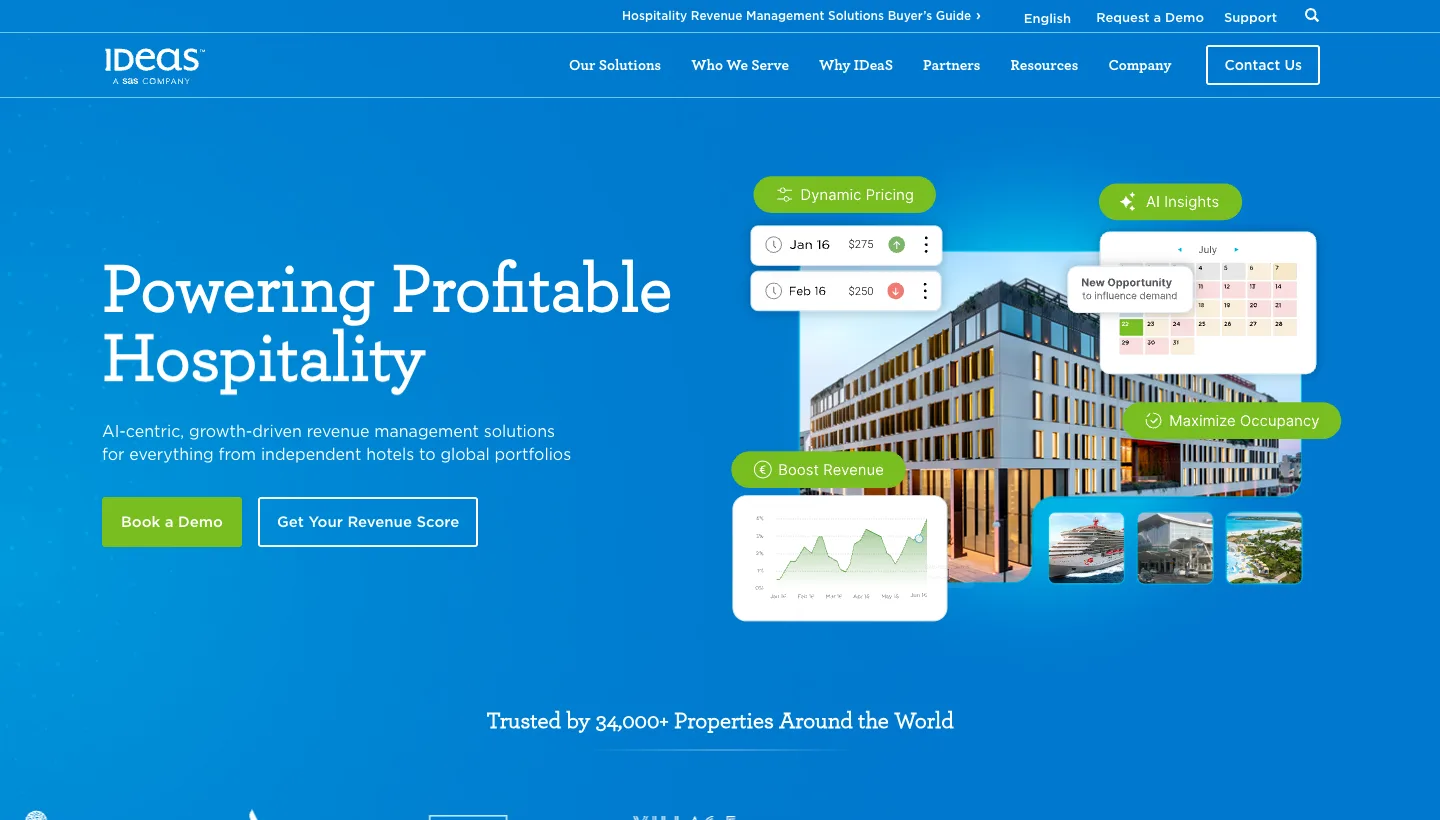
IDeaS, a SAS company, makes G3 RMS, a revenue management system built on AI that analyzes forecast data continuously to set pricing strategy, with what IDeaS calls decision automation. Its Automated Configuration, launched in 2023, sets up rooms and overbooking, market segments and rate codes, pricing and rate shopping, and suggests floor and ceiling prices for each room class. IDeaS said it cut setup from weeks to as little as one day (Hotel Tech Report). IDeaS also sells tools for budgeting and forecasting and for group and event pricing, and Spotlight, which gives marketing and sales teams the same demand forecasts.
Automates: demand forecasts, pricing decisions, overbooking levels and rate shopping.
Works with: the PMS and distribution systems that publish its prices. Dextr AI quotes the rate the PMS holds, so callers and guests hear the price the revenue system set.
Pricing: quote only.
Check first: the limits. Set floors, ceilings and an approval owner before you let any revenue system publish prices on its own.
8. Duetto
Best for: hotels, resorts and casinos that want pricing, group decisions and profit data in one revenue system.
Duetto calls its platform a revenue and profit operating system. GameChanger prices rooms in real time “with as much automation as you want”. ScoreBoard brings forecasts and reports into one dashboard, BlockBuster weighs group bookings against individual stays, Advance adds outside demand data and AI-driven rate recommendations, and HotStats benchmarks profitability against the market. GameTime automates pricing for select-service hotels, with as much or as little control as a small team wants. Duetto says more than 20,000 properties in over 100 countries use it.
Automates: real-time pricing, forecasts, group-versus-individual booking decisions and profit benchmarking.
Works with: the PMS and booking engines; Duetto lists its technology partners on its site.
Pricing: quote only. Duetto publishes an ROI calculator.
Check first: who reviews the exceptions. The more prices a system changes on its own, the more you need one person who checks the outliers every day.
9. Shift4
Best for: hotels with restaurants, spas and other outlets that want one secure way to take and keep cards across the property.
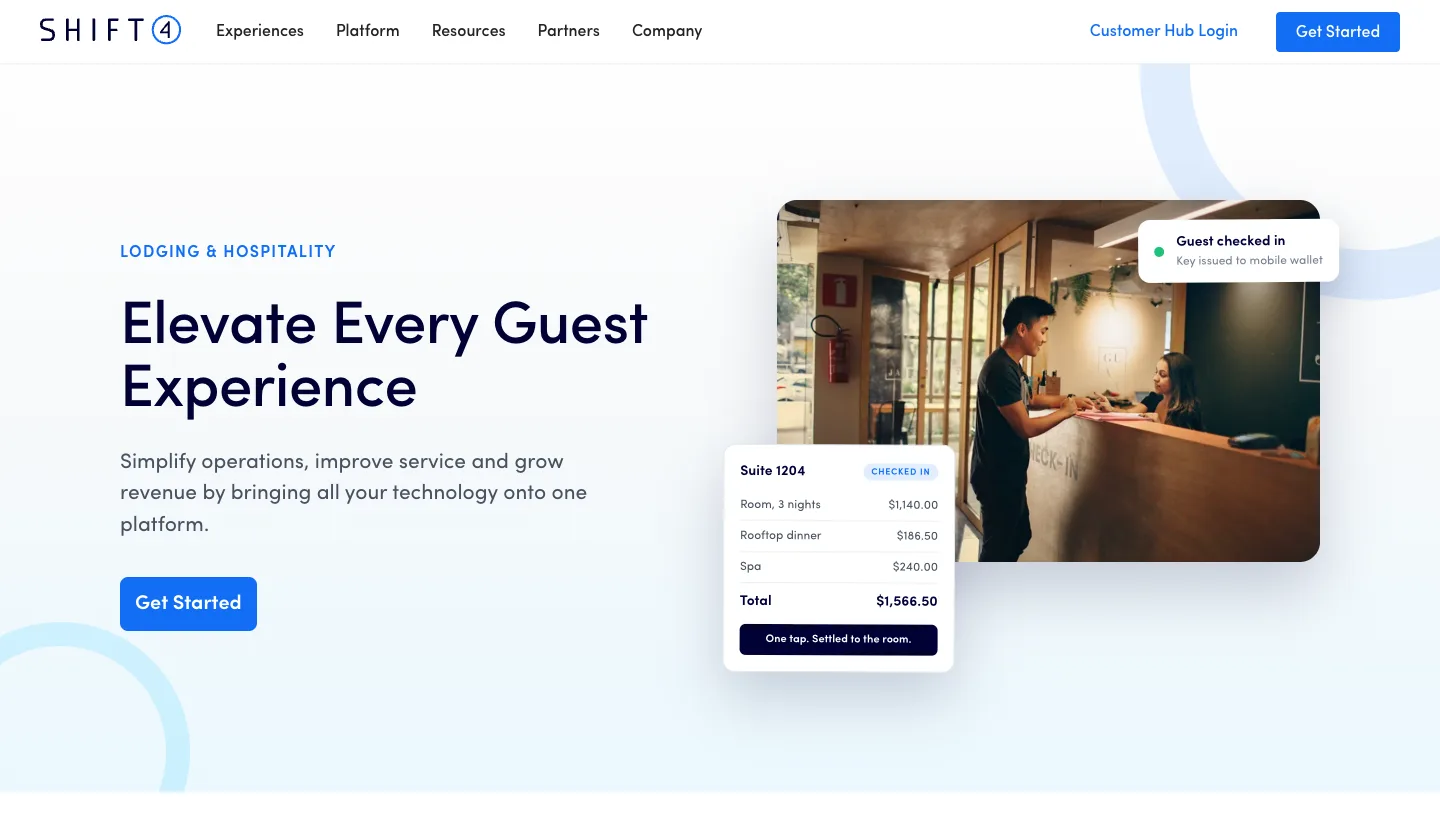
Shift4 processes payments for hotels, resorts and restaurants and integrates with the leading hospitality PMS and POS systems. Its tokenization swaps the card number for a token, so the PMS and every outlet can charge a card on file without storing it, which Shift4 says simplifies PCI compliance. Shift4 is also certified for chip-card processing in Oracle OPERA through Oracle Payment Interface.
Automates: card capture and tokenization, deposits and balances charged to the card on file, chip-card payments at the desk, and payment reporting.
Works with: Dextr AI through a live integration, plus Oracle OPERA, Maestro and other PMS and POS systems.
Pricing: processing rates are quoted.
Check first: whether one token follows the guest from the front desk to the restaurant and spa, and how deposits and added authorizations appear on the folio.
10. RemoteLock
Best for: independent hotels, motels, condo hotels and outdoor properties that want door codes issued from the reservation across a mix of lock brands.
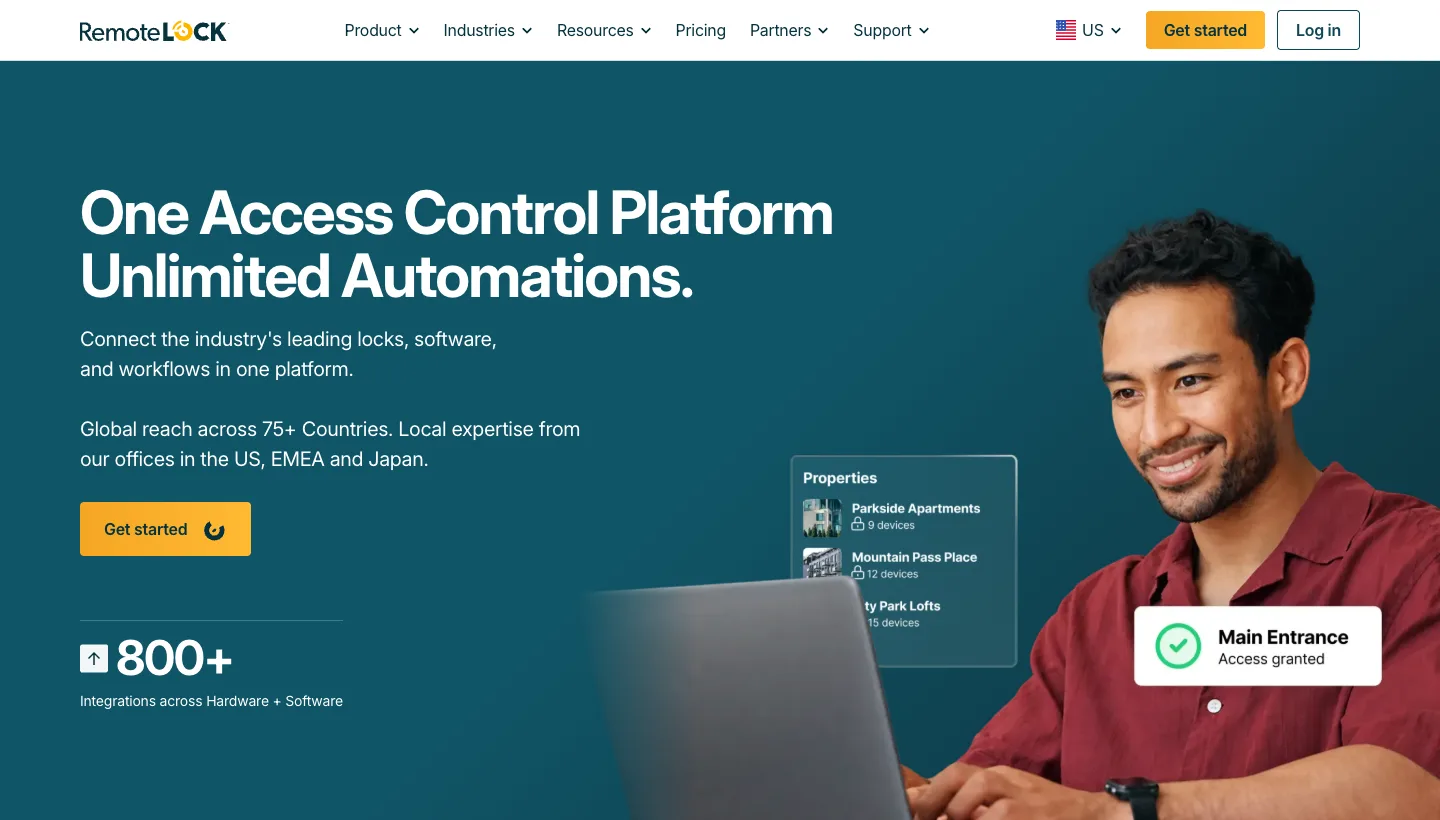
RemoteLock is access-control software that issues, changes and cancels codes without anyone touching the door. Connected to the PMS, it creates a code for each reservation that works only for that room and only for the stay, and it manages recurring staff codes and one-time vendor codes from the same place, with an activity log for every door. It works across lock brands, including Schlage and dormakaba, which helps when a property mixes old and new hardware. Its ReadyPIN option lets a lock check an encrypted PIN and its schedule with or without Wi-Fi (RemoteLock).
Automates: guest codes that start and end with the stay, staff and vendor access, and door activity logs.
Works with: Dextr AI through a live integration, so guests can ask for their access details by phone or text at any hour, plus PMSs such as Cloudbeds, Stayntouch and innRoad.
Pricing: published plans start at $6 per door a month billed annually, or $7.50 billed monthly (pricing).
Check first: room moves, date changes and early checkouts. Each PMS connection handles them differently; our guide to automating a hotel compares three of them.
11. Salto
Best for: hotels choosing new electronic locks that want mobile keys and access managed from the PMS.
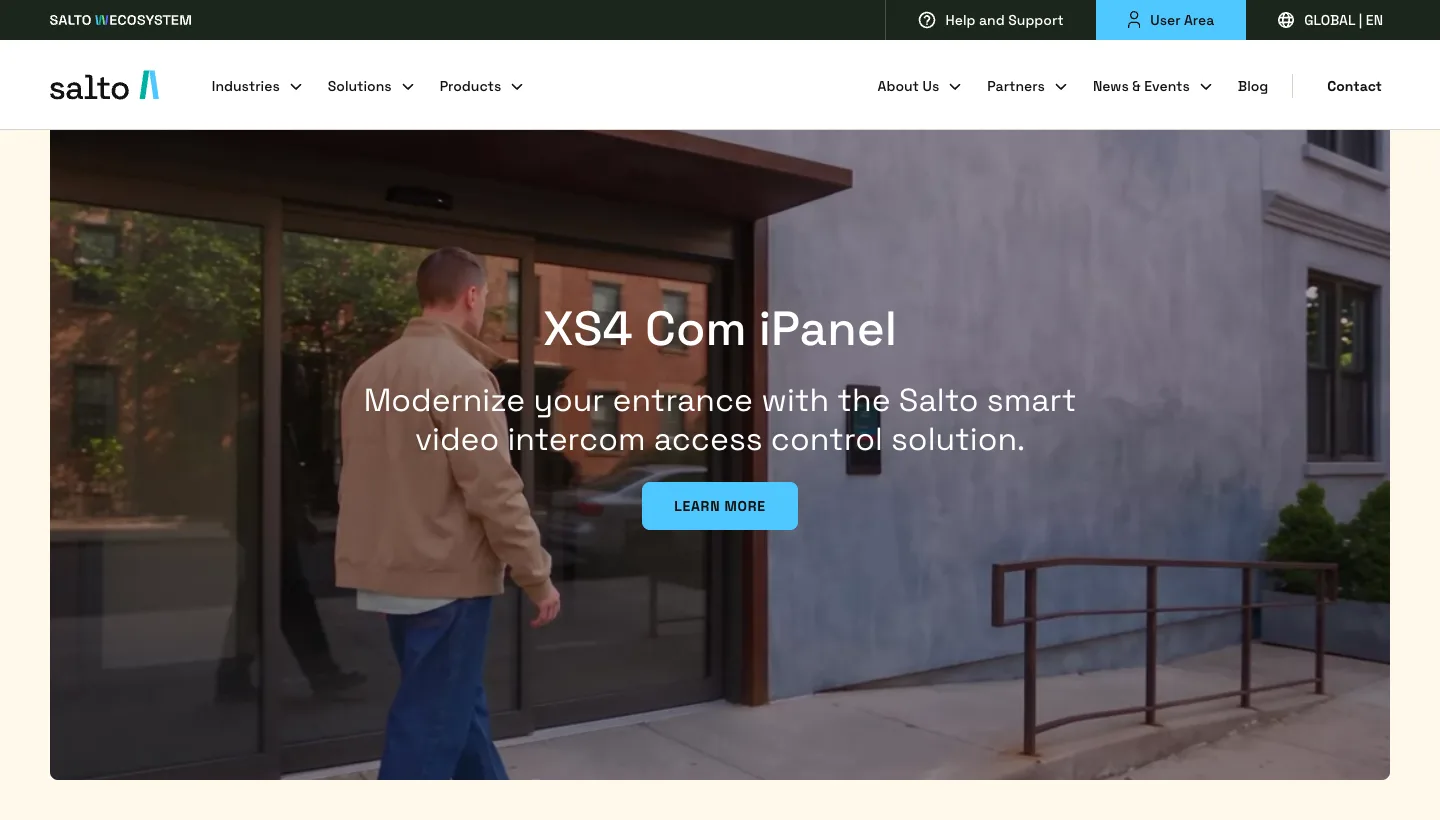
Salto makes electronic locks and the platforms that run them, with more than 20 years in the business and deployments in more than 90 countries. Connected to the PMS, Salto’s hospitality systems generate a guest’s key at check-in, deactivate it at checkout or cancellation, and update access when the guest changes rooms. Keys reach the guest through the hotel’s app, by email or by SMS, including wallet keys, and every door opening is kept in an audit trail. Salto lists 21 PMS technology partners for hospitality (Salto).
Automates: keys created and cancelled from the PMS, room-move updates, mobile and wallet keys, and access logs.
Works with: PMSs including Cloudbeds and RMS through Salto KS, its cloud platform.
Pricing: quoted, for hardware and software together.
Check first: what still works in an outage. Salto says its battery-powered KS locks are not affected by a building power cut, but the on-site hub needs mains power or a UPS.
12. Verdant
Best for: hotels with heating and cooling units in each room that want energy use to follow occupancy and the reservation.
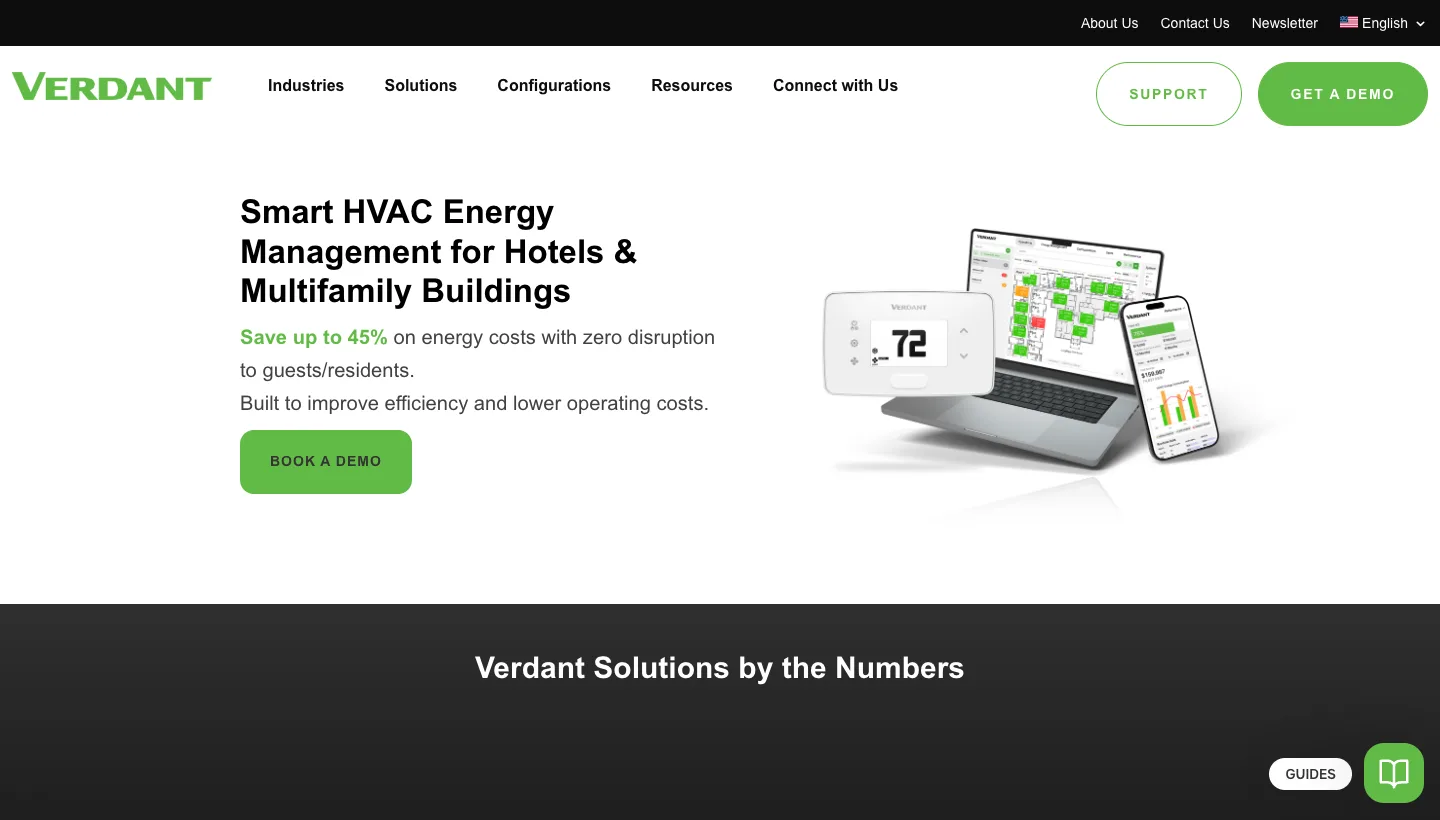
Verdant, part of Copeland, makes smart thermostats and software that set back heating and cooling when a room is empty or unrented. Connected to the PMS, it moves a room into setback at checkout and starts conditioning it before the next arrival. It can also combine PMS data with door-lock events, and it falls back to occupancy sensing when there is no PMS link (Verdant). Verdant says it is installed in more than 12,000 buildings, cuts HVAC runtime by 45% on average and saves about 20% on energy bills, with payback typically in 12 to 18 months once utility rebates are counted.
Automates: setbacks in empty and unrented rooms, conditioning before arrival, portfolio-wide monitoring and demand-response events.
Works with: PMSs including Oracle OPERA, and door locks from makers such as ASSA ABLOY and dormakaba.
Pricing: hardware is quoted, and Verdant handles utility rebate paperwork free of charge.
Check first: your energy code. California and Washington require guest-room setbacks in hotels built or altered under their codes, and Washington sets a deeper setback for unrented rooms (see the rules that limit automation).
13. Zapier
Best for: small teams connecting tools that have no native integration, such as forms, spreadsheets, email and team chat.
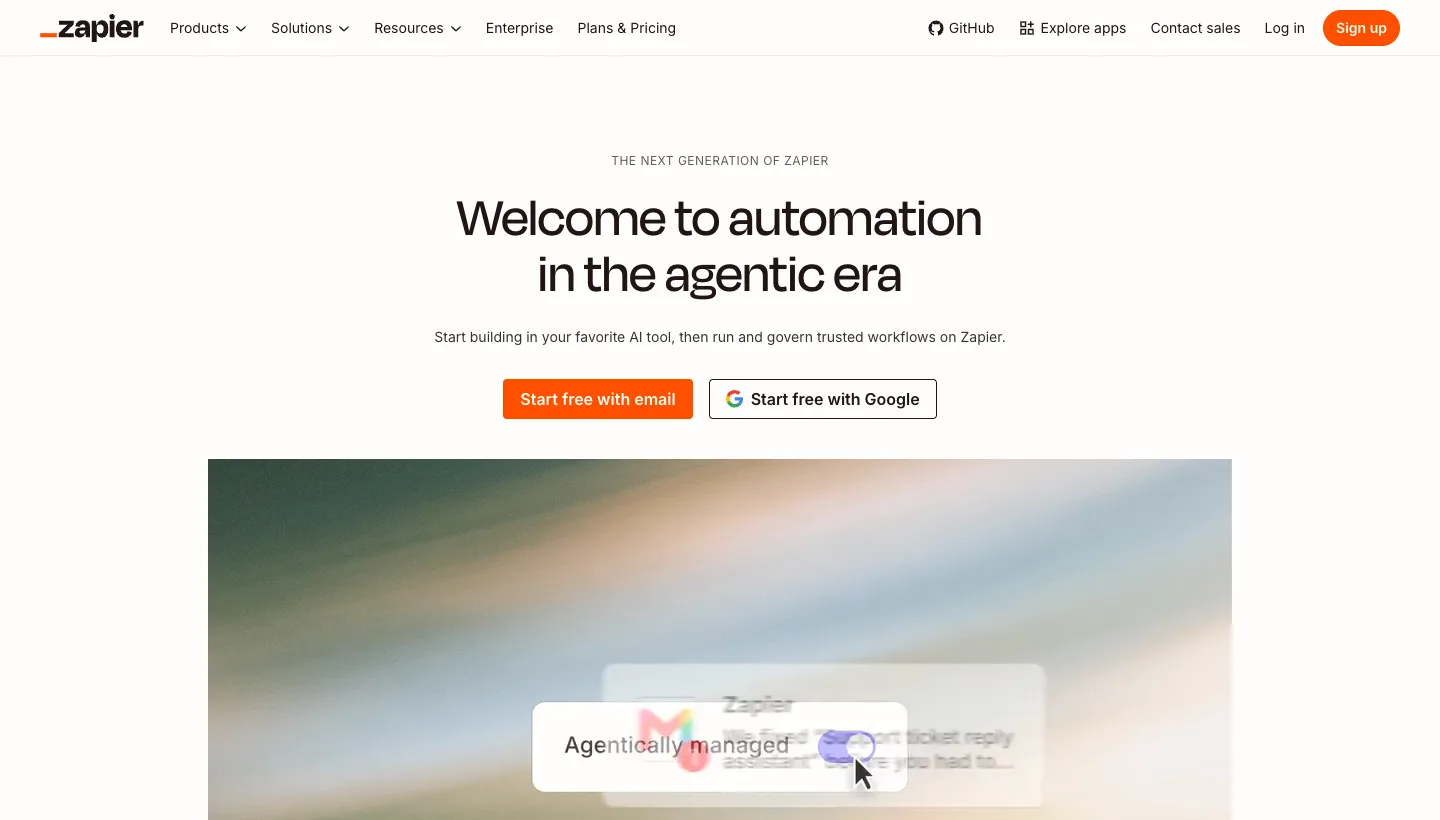
Zapier links more than 9,000 apps without code. A workflow, called a Zap, starts from a trigger and runs a set of actions: when a supplier invoice arrives by email, save the attachment to the accounts folder, log it in a spreadsheet and post a note in the finance channel. Zapier MCP lets AI tools such as Claude and ChatGPT take actions in the same apps. It is not built for hotels, and that is the point: use it for the back-office gaps your hotel systems leave.
Automates: hand-offs between general business apps: email, forms, spreadsheets, accounting, HR and chat.
Works with: more than 9,000 apps, with more than 66,000 triggers and actions.
Pricing: free for 100 tasks a month with two-step Zaps; Pro from $19.99 a month billed annually ($29.99 monthly) for 750 tasks; Team from $69 a month billed annually (pricing).
Check first: what passes through it. Keep card numbers, ID scans and passport details out of general automations and inside your payment and ID tools.
Other Hotel Automation Tools Worth a Look
For guest conversations, operations and guest marketing, the pick above is our own product. These are the specialists hotels most often compare it with for those jobs. Each description comes from the vendor’s own website.
Canary Technologies (guest messaging and check-in): contactless check-in, a lobby kiosk and mobile keys, upsells, card authorizations, payment links, digital tipping, AI guest messaging and AI Voice from one vendor. It works with OPERA, Mews, Cloudbeds and Stayntouch, among other PMSs. Pricing is quoted in three bundles, with AI Voice priced outside all three. See our side-by-side comparison.
Conduit, HiJiffy, Asksuite and Duve (guest messaging): AI agents that answer guests on WhatsApp, chat and other messaging channels, and Conduit’s also takes calls. Check-in, upsells and payments vary by vendor and plan. We compare ten of these tools, with published prices, in our hotel chatbot comparison.
ALICE by Actabl (service requests and housekeeping): a hotel operations platform that routes each request logged at the front desk to the right department and tracks it to completion. Real-time housekeeping boards replace radio coordination, supervisors can reassign tasks mid-shift and flag maintenance issues, and guests can message the hotel by SMS or WhatsApp. Pricing is by quote, and Actabl says most properties are in active use within 90 to 120 days, including onboarding and training. See our side-by-side comparison.
Amadeus HotSOS (maintenance and guest requests): service optimization software for hotel operations teams. It creates several guest amenity requests at once as delivery orders, runs preventive maintenance projects across departments, handles inspections and sends staff messages and notifications in real time. HotSOS Housekeeping is a separate product. Pricing is by quote.
Revinate (guest data and marketing): Revinate Core unifies guest profiles from every system, and Revinate Marketing and Pathways send email and SMS campaigns from booking to checkout. Revinate also sells a virtual concierge chat, review and survey tools, reservation sales tools for phone agents and RezForce, a call center of human reservation agents. Pricing is by quote.
If you already run one of these, ask any AI vendor, us included, whether its agents write into that tool or replace it. A request that lives in two systems gets answered twice or not at all.
How Hotel Automation Tools Connect
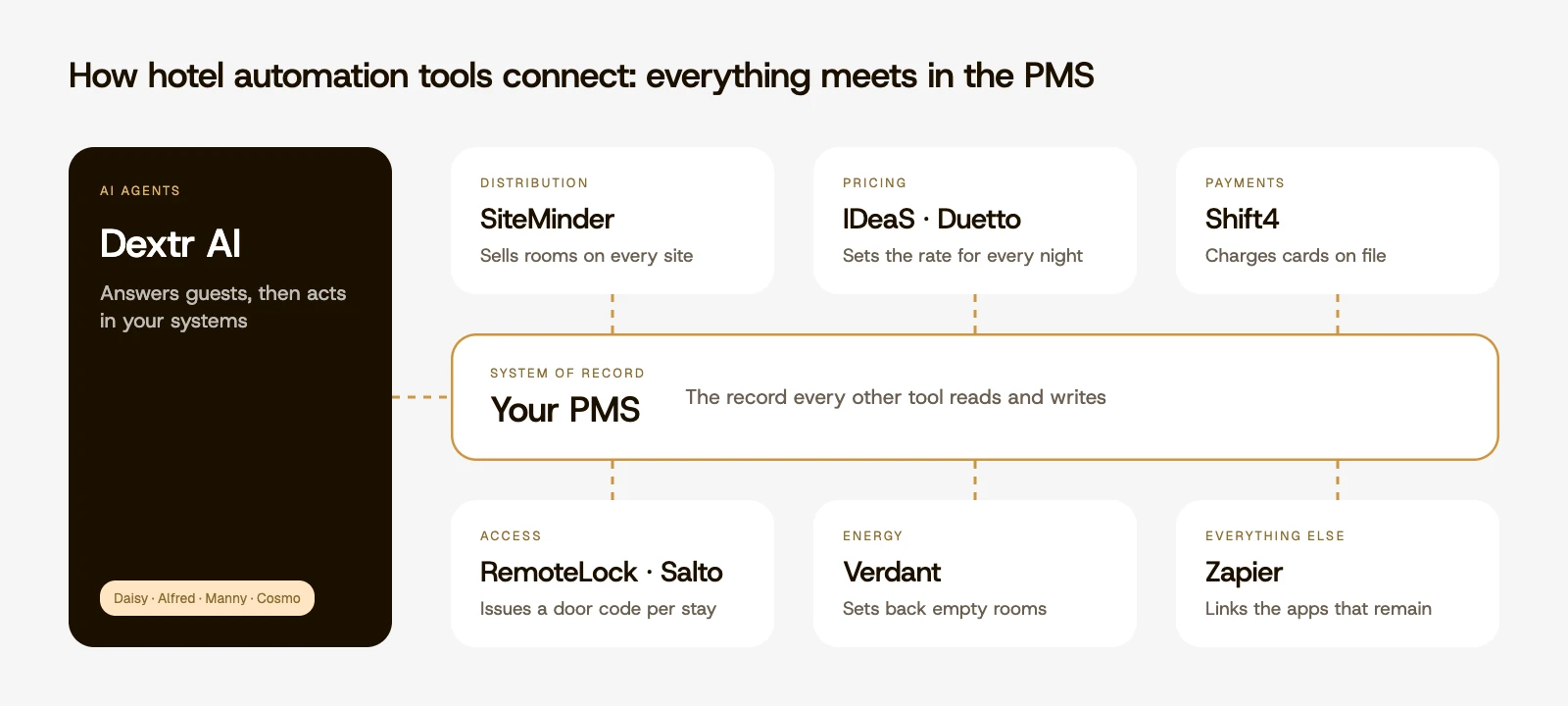
Hotel automation works when the tools share one record, and that record is the PMS. Everything else reads from it or writes to it: the revenue system sets prices, the channel manager sells rooms at those prices, the payment platform charges the card, the lock platform issues codes, thermostats follow room status, and AI agents answer guests from all of it, then write their actions back.
Connection
What happens automatically
Without it
AI agents and PMS
Calls and messages answered from live availability and the guest’s reservation; bookings, changes and tasks written back
Answers that don’t match the booking, and staff retyping requests
Revenue system to PMS and channel manager
New prices reach every channel without retyping
Rates go stale or are keyed by hand
Channel manager and PMS
Each booking updates availability on every site
Overbookings and manual closeouts
PMS to payments
Deposits and balances charged to stored tokens
Card numbers keyed and kept at the desk
PMS to locks
Codes and keys issued, moved and cancelled with the stay
Keys handed out by hand, and codes that outlive the stay
PMS to thermostats
Rooms set back at checkout and conditioned before arrival
Empty rooms heated and cooled all day
Zapier to everything else
Back-office hand-offs run on their own
Copying and pasting between systems
Which Hotel Automation Tools to Combine, by Property Type
You don’t need all 13. These combinations cover most of the work for each kind of property. Where you already run an equivalent, keep it.
Property
Start with
Add when ready
Independent hotel or inn
Cloudbeds for the PMS, channel manager and booking engine; Dextr AI for calls, messages and check-in; RemoteLock for door codes
Zapier for back-office tasks; Verdant when in-room units are replaced
Select-service or limited-staff hotel
Stayntouch or Mews for self check-in; Dextr AI; RemoteLock or Salto
Duetto’s GameTime for pricing; Verdant
Full-service hotel or resort
OPERA Cloud or Mews; IDeaS G3 RMS or Duetto; SiteMinder or your PMS’s own distribution; Shift4; Dextr AI
Salto mobile keys; Verdant
Hotel group or management company
OPERA Cloud; IDeaS G3 RMS or Duetto; Shift4; Dextr AI across every property
Salto and Verdant, rolled out property by property
Outdoor and mixed-use properties follow the same pattern with different doors and different questions. See our guides for campgrounds, RV parks and condo hotels.
What Hotel Automation Tools Cost
Each kind of tool is priced differently, so compare monthly totals rather than list prices. These are the published benchmarks as of November 2026:
Tool type
How it is priced
Published benchmark
AI agents
By usage
Dextr AI quotes per property, with no setup fee
PMS
Per room or by plan
Mews prices per room; Cloudbeds quotes all four of its plans
From $6 per door a month billed annually (RemoteLock)
Energy management
Hardware, plus software
Payback typically in 12 to 18 months with utility rebates, according to Verdant
Workflow glue
Per task
Free for 100 tasks a month; paid from $19.99 a month (Zapier)
Weigh those costs against the labor they cover. More than half of the 246 hoteliers in a 2026 AHLA survey said their hotels were somewhat or severely understaffed. Covering one overnight desk shift costs about $49,000 a year in wages at the median U.S. desk clerk pay of $16.86 an hour (BLS, May 2025), before taxes and benefits. Our guide to automating a hotel sets out the order to roll these tools out in.
8 Questions to Ask Before You Buy Any Hotel Automation Tool
What does it write to the PMS?
Reading data is easy. Writing bookings, charges, notes and room status is what saves time. Ask for a live demo on your own PMS, not on demo data.
What happens when it fails?
Every tool fails sometimes. Ask who is alerted, how fast, and what the guest sees in the meantime.
Where is the record?
You should be able to see what the tool did, when and why, and export that record.
What are the costs beyond the subscription?
API calls, payment processing, text messages, hardware, installation and add-on modules.
Where do guest and card data go?
Card numbers belong in your payment gateway as tokens. Ask whether the vendor ever stores them, and whether your guests’ data trains anyone’s models.
How long until it is live, and what does your team do?
Ask for the setup hours, the training needed and who maps your rooms, rates and policies.
How will you measure it?
Agree the baseline before go-live: labor hours per occupied room, missed calls, booking conversion, energy use per occupied room.
Can you leave?
Check the contract length, how you export your data, and what happens to your tokens, door codes and phone numbers if you switch.
Hotel groups buying AI across a portfolio have more to check, from security documents to pilot design. Our guide to choosing an enterprise AI vendor for hotels covers the 12 requirements.
Hotel Automation Glossary
Term
What it means
PMS (property management system)
The hotel’s system of record for reservations, rooms, rates, guests and billing
CRS (central reservation system)
Holds rates and inventory for many hotels at once, usually for chains and groups
Channel manager
Sends rates and availability to booking sites and brings their reservations back into the PMS
IDS (internet distribution system)
The booking websites that sell hotel rooms to travelers online, such as Booking.com, Expedia and metasearch sites
GDS (global distribution system)
The networks travel agents and corporate booking tools use to book hotels, such as Amadeus, Sabre and Travelport
RMS (revenue management system)
Forecasts demand and recommends or sets prices
GRMS or EMS
Guest room management or energy management system: controls heating, cooling and lighting in guest rooms from occupancy and room status
OHIP
The Oracle Hospitality Integration Platform, the set of APIs outside systems use to connect to OPERA Cloud
Tokenization
Replacing a card number with a token, so systems can charge the card without storing it
PCI DSS
The card industry’s security standard for any business that stores, processes or transmits card data
AI agent
Software that understands a request in plain language and acts in your systems to complete it. A workflow, by contrast, follows fixed steps (see AI agents versus chatbots)
The Bottom Line
Pick the PMS first, then add one tool per job and judge each by what it writes back to the PMS. For most hotels the fastest payback is in the conversations: the calls, messages and requests that arrive at every hour, which is the work Dextr AI’s agents take on inside the PMS you already run. Add pricing, distribution, payments, keyless entry and energy as each one earns its place, and use Zapier for the gaps.
Frequently Asked Questions
What are hotel automation tools?
Software and connected devices that complete routine hotel work without staff starting each step, such as answering guests, keeping rates in sync across booking sites, setting prices, charging cards, issuing door codes and adjusting room temperatures. Most of them connect to the property management system (PMS), which holds the reservation data they act on.
What is the best hotel automation software?
It depends on the job. For guest conversations, check-in and operations, Dextr AI runs AI agents inside the PMS. For the PMS itself, OPERA Cloud suits hotel groups, while Mews, Cloudbeds and Stayntouch suit independent hotels. SiteMinder handles distribution, IDeaS and Duetto handle pricing, Shift4 handles payments, RemoteLock and Salto handle door access, Verdant handles energy and Zapier fills the gaps between apps.
Which AI tools work with both Mews and OPERA Cloud?
Dextr AI has live integrations with both Mews and OPERA Cloud, as well as Cloudbeds, Stayntouch, Apaleo, RMS Cloud and other property management systems, more than 50 in all. A hotel group can run the same AI agents at properties on different PMSs.
How much do hotel automation tools cost?
Each type is priced differently. PMSs and revenue systems are usually quoted per room, keyless access software starts at about $6 per door a month (RemoteLock), payments cost a share of each transaction, Zapier is free for 100 tasks a month and paid plans start at $19.99, and AI agents such as Dextr AI are priced by usage.
Is automation cheaper than hiring more hotel staff?
For routine, round-the-clock work, usually. Covering one overnight desk shift costs about $49,000 a year in wages at the median U.S. desk clerk wage, before taxes and benefits, while AI agents are priced by usage and answer every call and message at any hour. Staff remain essential for judgment, service recovery and safety, so most hotels use automation to cover hours and volume, not to replace their team.
Can automation tools coordinate housekeeping?
Yes. Most PMSs track room status, and AI operations agents go further. Dextr AI’s Manny builds the housekeeping board, balances rooms across attendants, turns guest requests into timed work orders and schedules staff from occupancy.
What does IDS stand for in the hotel industry?
Internet distribution system: the booking websites that sell hotel rooms online, such as online travel agencies and metasearch sites. A channel manager keeps a hotel’s rates and availability on those sites in sync with its PMS.
Will hotel automation tools replace front desk staff?
No. They take over repetitive work, such as answering routine questions, sending door codes and updating rates, so staff can spend their time with guests. Some places also require people on site: New York City requires continuous front-desk coverage at hotels.
Growth and search specialist with hands-on experience in the AI sector. Covers AI agents, voice AI and automation, and how businesses evaluate and adopt them.
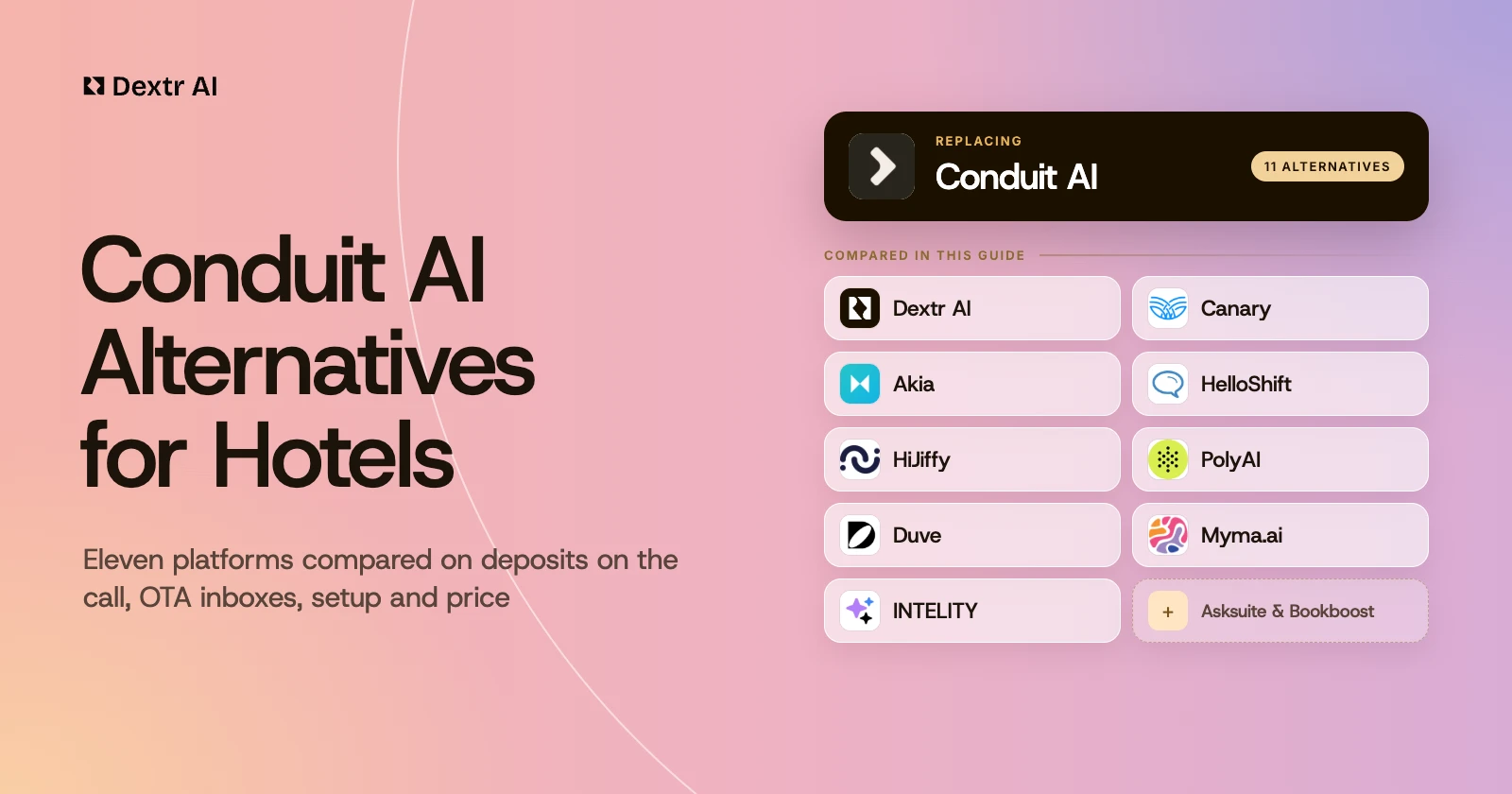
Conduit puts guest messages and calls on one AI agent with prices on its website. Hotels look elsewhere when they want the deposit taken on the call, the workflows built for them, Booking.com messages covered today or the back of house run by agents. Eleven alternatives compared, with prices and lessons from real deployments.
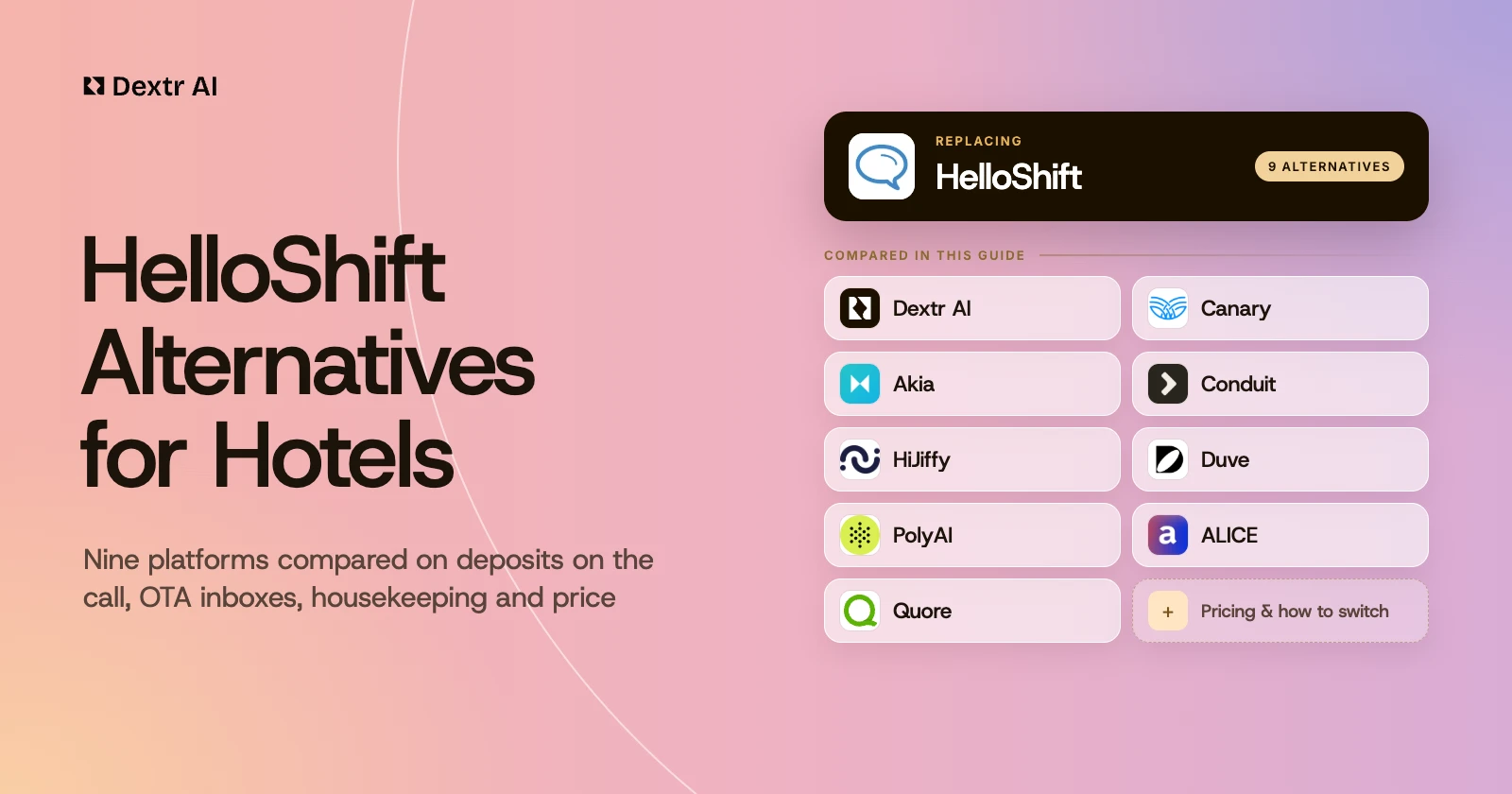
Nine HelloShift alternatives compared on four questions: does the call end with a deposit taken, which inboxes does the AI answer, what does a hotel under 40 rooms pay, and who runs housekeeping? With prices for a 20-room inn and a 60-room hotel.
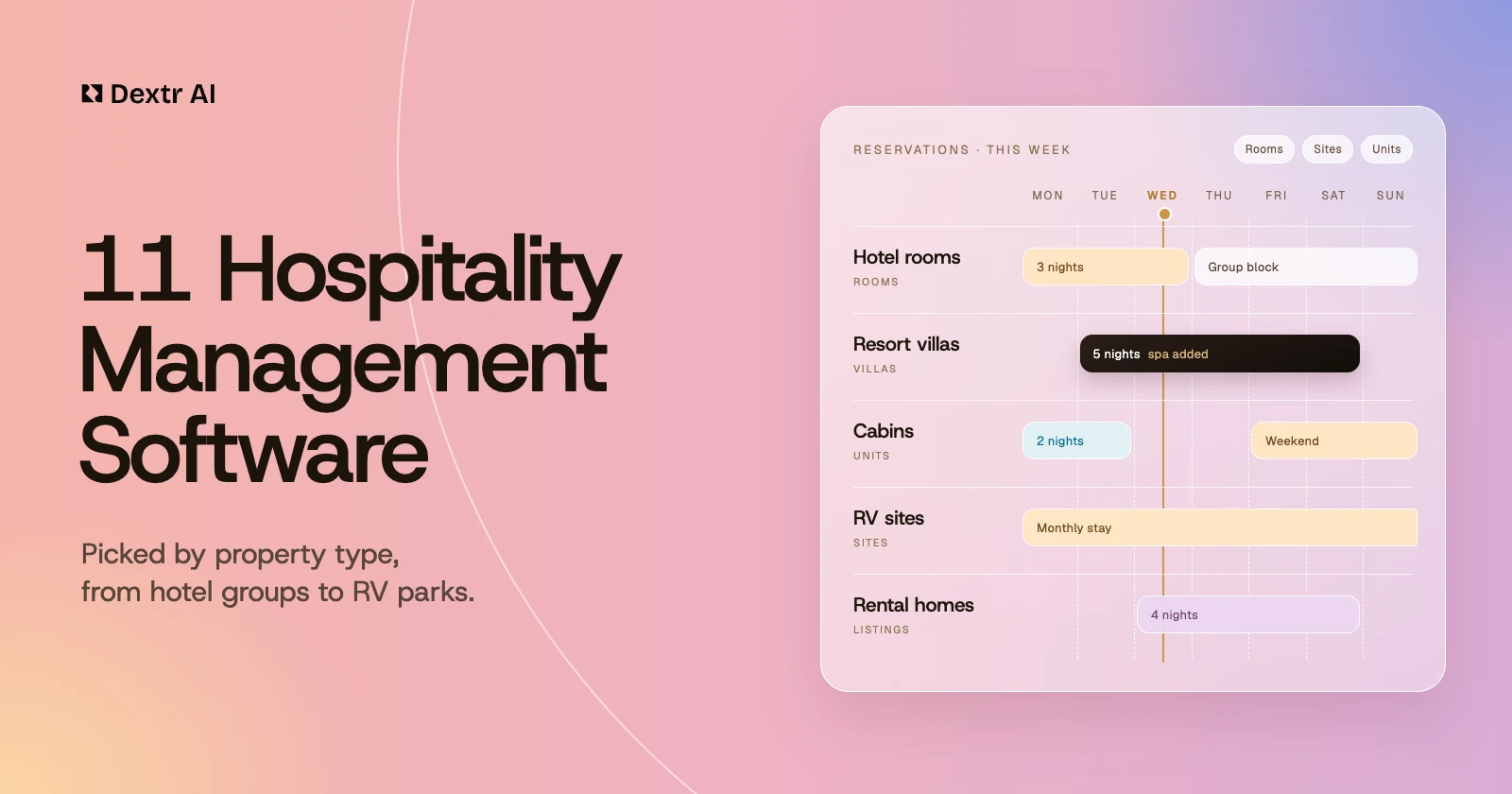
Eleven property management systems, picked by the kind of property each one suits, from hotel groups and resorts to B&Bs, RV parks and vacation rentals, with prices where they're public and what to check first. Plus entry 0: the AI layer that works inside all of them.
Deepak Sharma · Read article
Ready to grow your business?
×
The demo scheduler is provided by HubSpot and uses functional cookies. Allow functional cookies to book a time here, open the scheduler on HubSpot's site, or use the Inquiry tab.